Despite a modest stature of 5′ 8″ and a face that was recognizable just about anywhere, Frank Sinatra was an intimidating man. After he passed away, his friends and family would reminisce about “how you could feel Frank show up fifteen minutes before he actually arrived.“

(not a joke)
Had Sinatra been alive today, the internet would probably say that he has aura. Aura is internet-speak for the x-factor, style, or cool that accompanies a person with immense gravitas; someone like Boat Kid, who more or less was the first subject of this rhetoric in popular culture. When someone successfully exercises their aura, like Michael Jackson in the first two minutes of his signature Superbowl performance, they say that he or she is aura farming.
Parlance
In many ways, the emergence of “aura” is related to another term in popular society. The term is vibe. Vibe has become a collective verbal tic of modern citizens; an opaque filler-term that can be applied to anything while simultaneously meaning nothing. I have used it countless times and probably will again, but my feelings about it are very similar to my feelings about the word “interesting.”
Growing up, these were words you only found in New Age circles, with vibes being the diminutive of vibrations and aura being an energy field that some individuals claimed they could see and manipulate. (In seventh grade, my father took me to a Reiki healer who claimed he could cure my migraines. The man spent fifteen minutes hovering his hands six inches above my head and then charged my dad two hundred dollars on the way out, suggesting that he had repaired my aura and recalibrated my vibrations.)
As far as I can tell, these are sense-words; adjectives meant to describe an effect that we feel but can’t necessarily link to a specific visual trait.
It’s like supercalifragilisticexpealidocious, but for attentional faculties. It’s what we say when we don’t know what to say.
Body Language
Of all the words in the English language, sense-words are some of our most important. As Wittgenstein explained, “the limits of my language are the limits of my world.” Sense-words tend to be body language too. Literally, language about the body, which tells us something about each era’s perception of their selves and the way they relate to their environment.
Eye contact, for instance, is a body-sense-word. It tells you how, when two people’s eyes meet, nothing physical is exchanged, but a type of touch still takes place. This is why, when invited, eye contact is affectionate or even erotic; when uninvited, it feels like a violation.
So when we talk about vibes, there are connotations of sound because it deals with vibrations, while aura is often spoke about in visual terms. Therein lies my complaint. These are the wrong senses to properly discern aura. And if we are incorrectly discerning aura, it is no wonder that culture is possessed with wrong ideas of power, influence, and hospitality.
The Right Sense
In my breakdown of Peter Gabriel’s Through The Wire, I talk about how the ear is prone to manipulation. The mind tends to conform to what it hears without judgment. Visually, we are better, but not by much. The eyes are still too accepting (hence, optical illusions).
As Paul Elard once wrote:
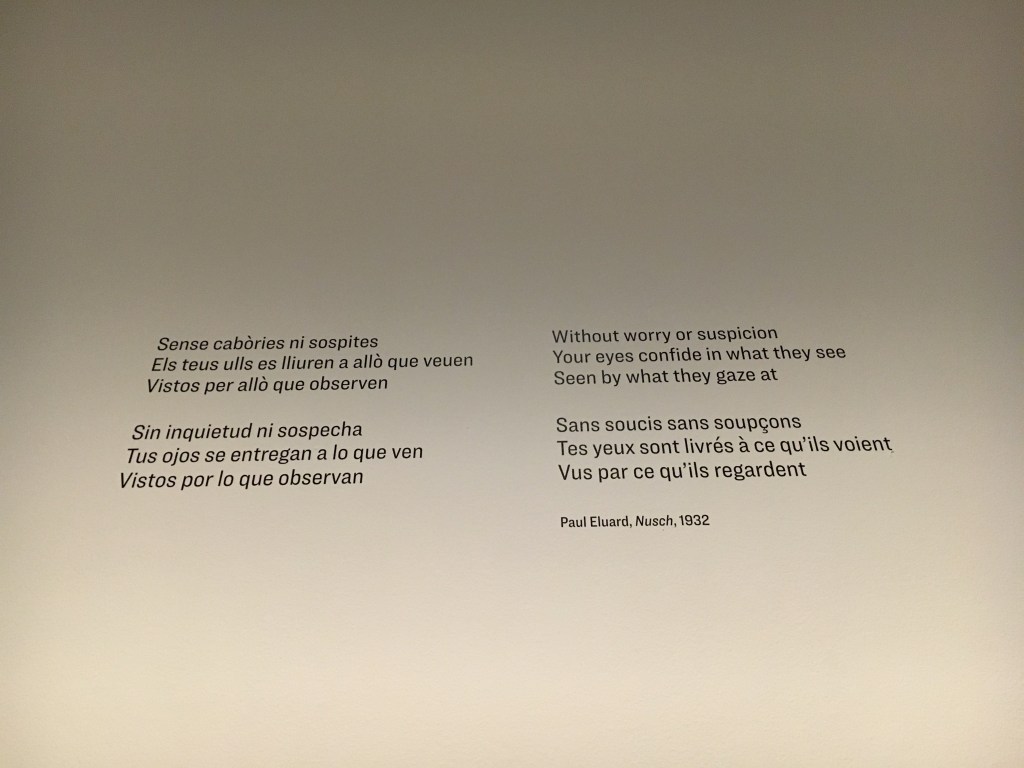
No, even spiritually, aura is not a matter of eyes and ears— it is a matter of the nose. Aura is all about smell. Few have articulated this more beautifully than Ivan Illich who, in his 1998 speech titled Cultivation of Conspiracy, had already thought in depth about the concept:
“You cannot lay a claim on aura. I speak of atmosphere, faute de mieux. In Greek, the word is used for the emanation of a star, or for the constellation that governs a place; alchemists adopted it to speak of the layers around our planet. Blondel reflects its much later French usage for bouqet des esprits, the scent those contribute to a meeting.
I use the word for something frail and often discounted, the air that weaves and wafts and evokes memories, like those attached to the Burgundy long after the bottle has been emptied.
To sense an aura, you need a nose; to savor the feel of a place, you trust your nose. To trust another, you must first smell him.“
The nose has always been the arbitrator of discernment. Why else do we use hound dogs to help solve mysteries and, when we sense that something is wrong with a situation, say that it smells fishy?
But Why Smell?
The main thrust of Illich’s speech goes in a very different direction, but part of his message—as I understand it—is that scents are honest because they are co-mingling and created in community. They are the very real product of everywhere that a person has been, who they have been with, and what is inside them. Odor can be masked or temporarily washed away, but it can’t be erased. This is, I believe, related to one of Auden’s rules for rabble-rousers: Never make love to those who wash too much.
A place, or a person, contributes their smells, pheromones, and chemicals constantly to an environment. Moreover, our noses carry scents deep into our bowels and leaves indelible markings on our brain chemistry. That’s why one whiff of loved one’s perfume or aftershave can trigger an onslaught of emotion, particularly if that person has passed away. Even someone who is far away feels close when their used sweater is brought to the face. And there is, perhaps, no better assurance of attraction than when a romantic partner enjoys the non-deodorized body odor of their lover.
Every small intricacy, nuance, and subtlety is included in a single smell. Scents are not talked about as competing, like sounds and lights can compete. Instead, smells are unified, always combined and talked about as one unified odor. What is that smell?
Conclusion
Perhaps my favorite quote from the above speech, and one that feels especially pertinent in today’s media environment, is when Illich’s friend tells him:
“Don’t kid yourself, Ivan. Don’t imagine that you can be friends with someone that you can’t smell.”
I am not suggesting, of course, that a literal smell test is needed as a pre-requisite for influence. I am suggesting, however, that our metaphors and language reveal something about the way we are missing the mark when it comes to how we choose our heroes. The way we speak about aura, as if it were about maintaining a cool facade in the public eye, as opposed to cultivating a unique and attractive aroma for your community, is bound to lead us astray. The humble subtleties of smell are a much better guardian than the boisterous and impressive visuals of spectacle.
Most importantly, without a proper arraignment of individual aura, we can never realize the full meaning of atmosphere, culture, or context; which means we can’t design hospitable futures. World-building is easier than we often make it out to be, but it certainly requires a nose. The nose knows. You smell me?
Long live everything,
Bradley Andrews
P.S. — Everything I am trying to say, Gandalf said it first.
About the Author:
Bradley Andrews is a hopeful rabble-rouser on a mission to inspire the world. Stay in touch with what he’s doing by subscribing to a weekly digest of his activity through micro.blog. This will send you writing, photos, and other curiosities that you are guaranteed to love.
 Bradley's Website
Leave a comment